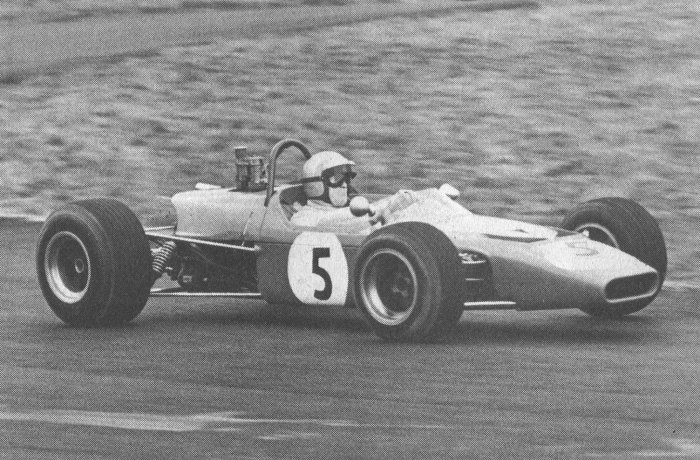
| John
Crosslé has been building cars in Holywood, near Belfast, since 1957
and is Ireland's longest-established racing car manufacturer by some distance.
The Crosslé Car Company has built cars for many formulae including
F2, F3, F5000 and Sports Cars however it is in the Ford based classes
that it has been the most successful.
Their first car was an 1172 Ford Special produced in 1957, the first single
seater was the 4F intended for use in Formula Junior or 1172cc racing.
The chassis that would bring the Crosslé name to the forefront of
motorsport was the Leslie Drysdale designed F Ford 16F, Gerry Birrell
took the European championship in his car and over 40 cars were built
and sold. Following this success Crosslé would produce large numbers
of very competitive, and successful, FF1600 and FF2000 chassis.
|
 |
|
 |
| |
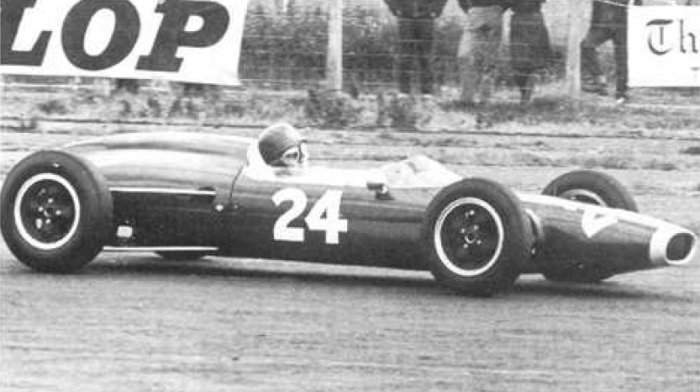
| The
6F in 1172 spec. |
|
In
September 1966 Gerry Corbett entered a Crosslé in a race at
Castle Combe but failed to finish, it was a similar story at Brands
Hatch in October. It is likely that this was a 6F, Crosslé
built three of these cars in 1964, two in 1172 specification and
one in F3 guise, although it seems no F3 races were undertaken.
A further four models were built in 1965, three for local racing
and one to American Formula C rules. The 6F was a conventional spaceframe
design although the rear suspension was unusual for the time in
using a combination of wishbone, transverse link and hub carrier. |
| |
 |
|
 |
| |
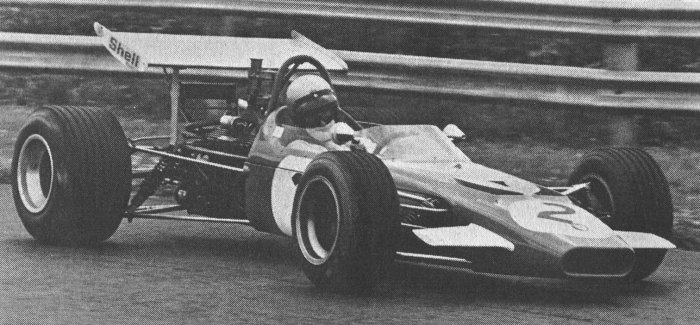
| Brian
Nelson winning a libre race at Mondello Park in August 1970,
by now the 17F had grown wings. |
|
In
1970 Crosslé announced the 17F, a slim space framed car with
conventional suspension, with drivers such as Gerry Birrell, Brian
Nelson and John Watson mentioned as possible pilots but plans were
shelved due to lack of development time and the car never left Ireland.
Norman Moffett practised a Crosslé 17F for a non-championship
race at Crystal Palace in June 1971 but withdrew before the race
and he also took part in the non-championship race at Kirkistown
in July. In 1973 the 26F, a derivative of the F2 22F was again announced
but it didn't seem to race, so Crosslé's flirtation with F3
was brief and sadly unsuccessful. |
|